Dancing Glass turns light into poetry. Along its horizontal structure, cylinders of varying dimensions are aligned and overlaid, allowing the eye to pass through them. When the lamp is switched on, light travels through the transparencies, bringing reflections and shadows to life.
One step forward and the composition’s rhythm seems to change, as a sense of movement emerges from the encounter between glass, light, and viewer.
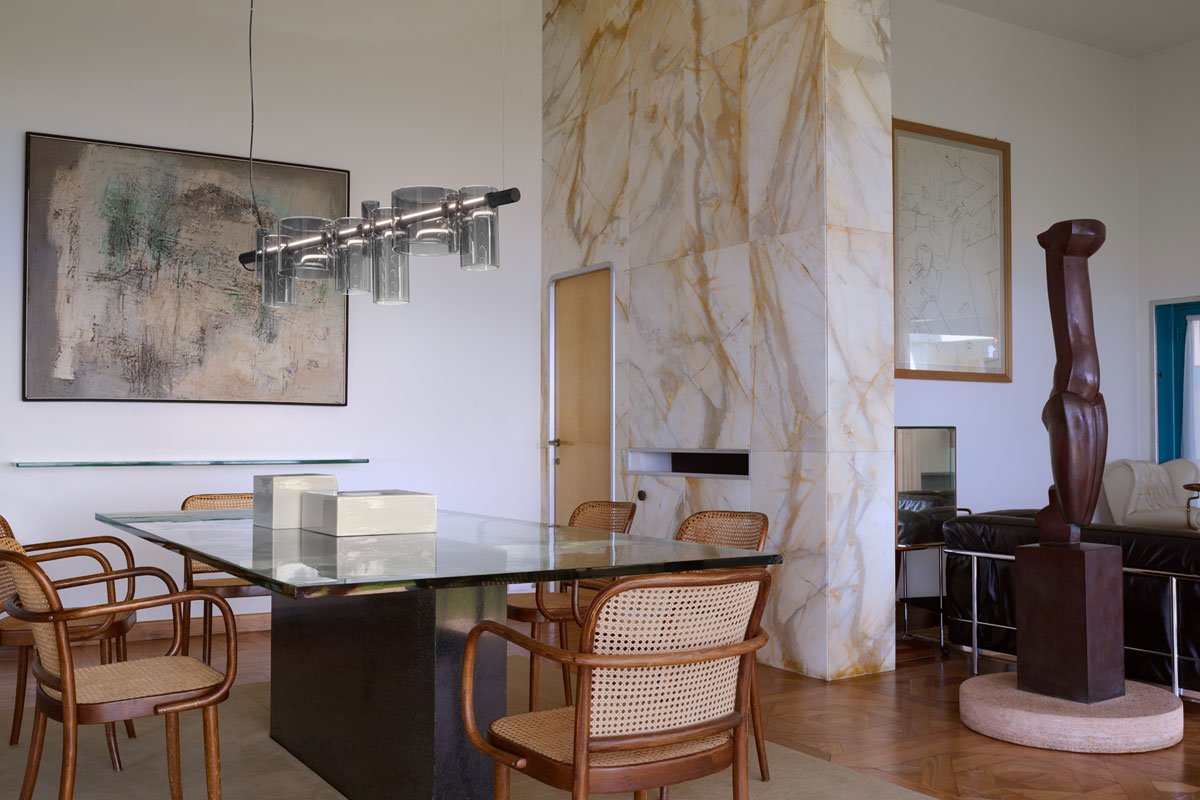
Victor Vasilev brings rhythm to glass
In the pendant model designed by Victor Vasilev for Oluce, a thin structure houses the LED source. Elements of varying dimensions are arranged around this rigorous axis. Their irregular forms break the continuity of the line and give the lamp a sculptural presence, while leaving the space beyond the object in view.
When switched off, Dancing Glass displays the interplay of solids and voids created between one element and another. Once switched on, the composition takes on a new character: the transparent or fumé glass intercepts the light, gathers its reflections, and alters the depth of the composition. The structure remains discreet, while everything around it becomes a reflective surface.
A light to observe and direct
The effect derives from precise technical choices. The pendant lamp emits light both upward and downward, while the reflectors can be individually directed. Shadows and reflections therefore take on different weight depending on the direction of the light, the surrounding environment, and the position from which the lamp is observed.
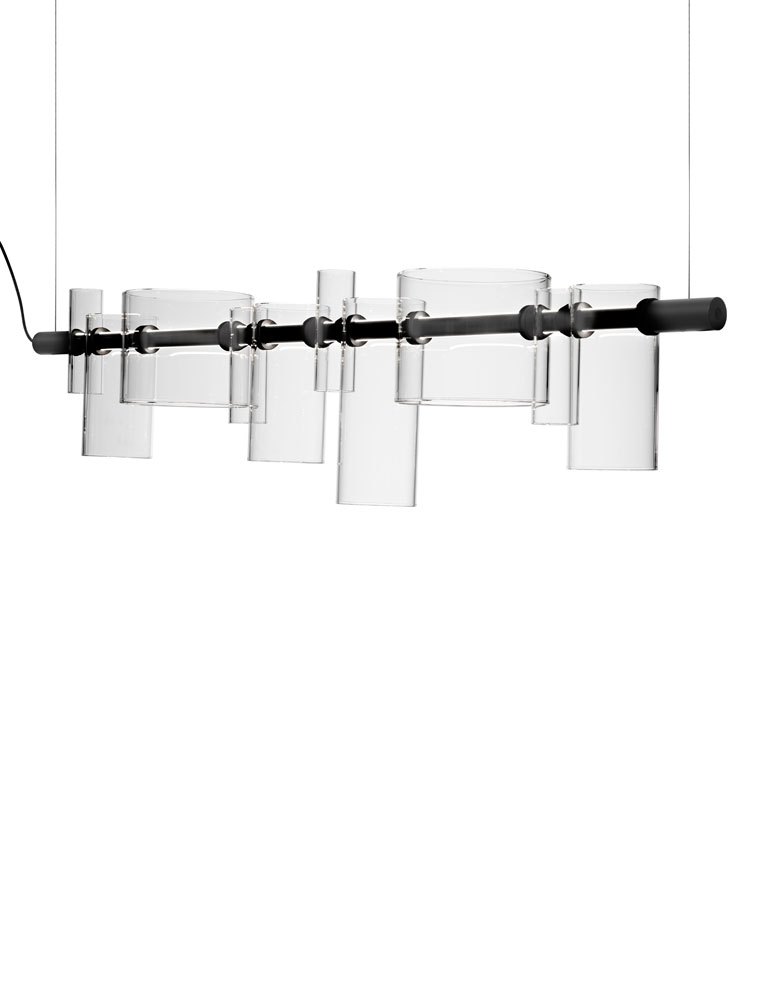
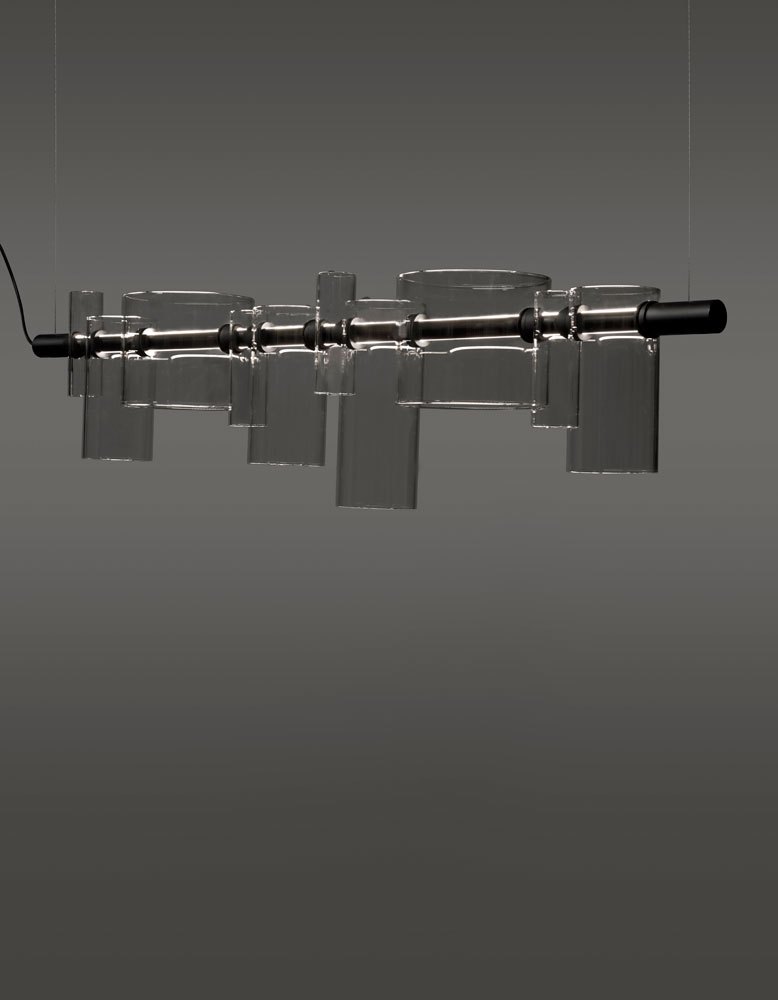
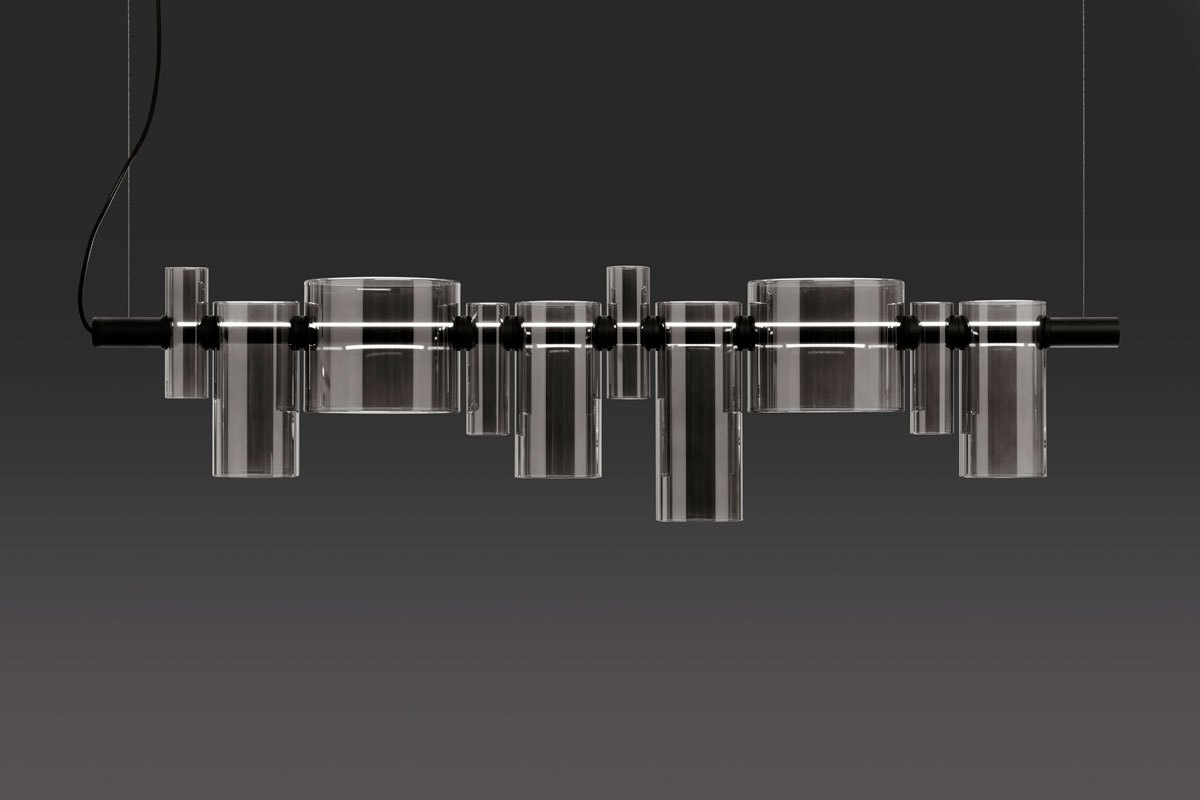
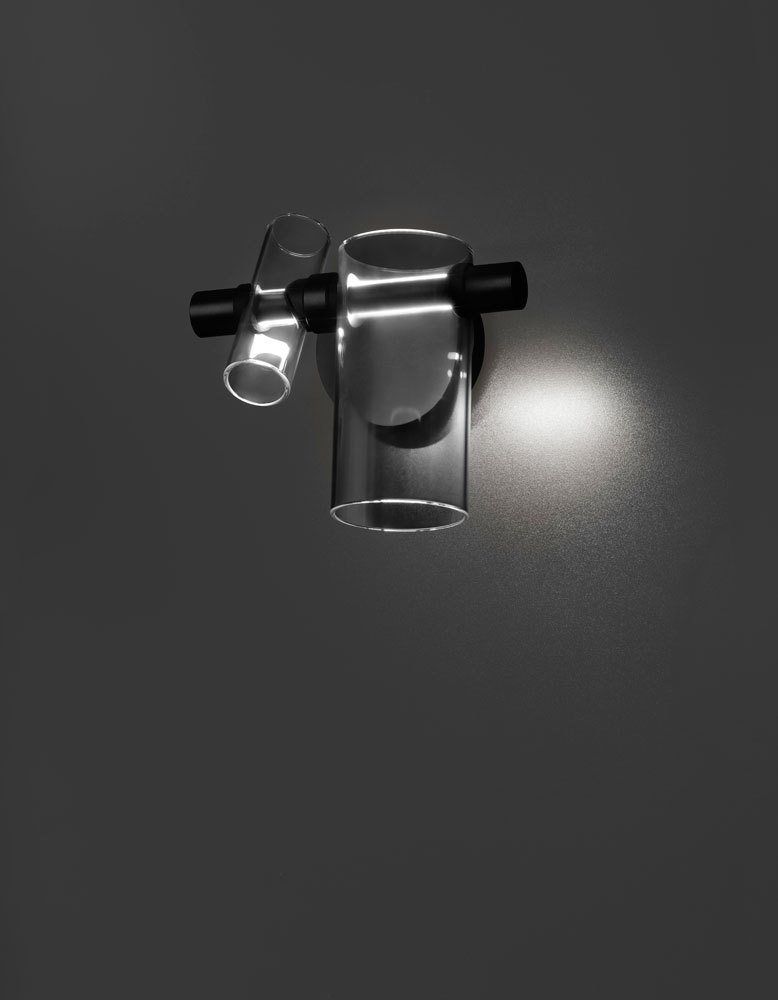
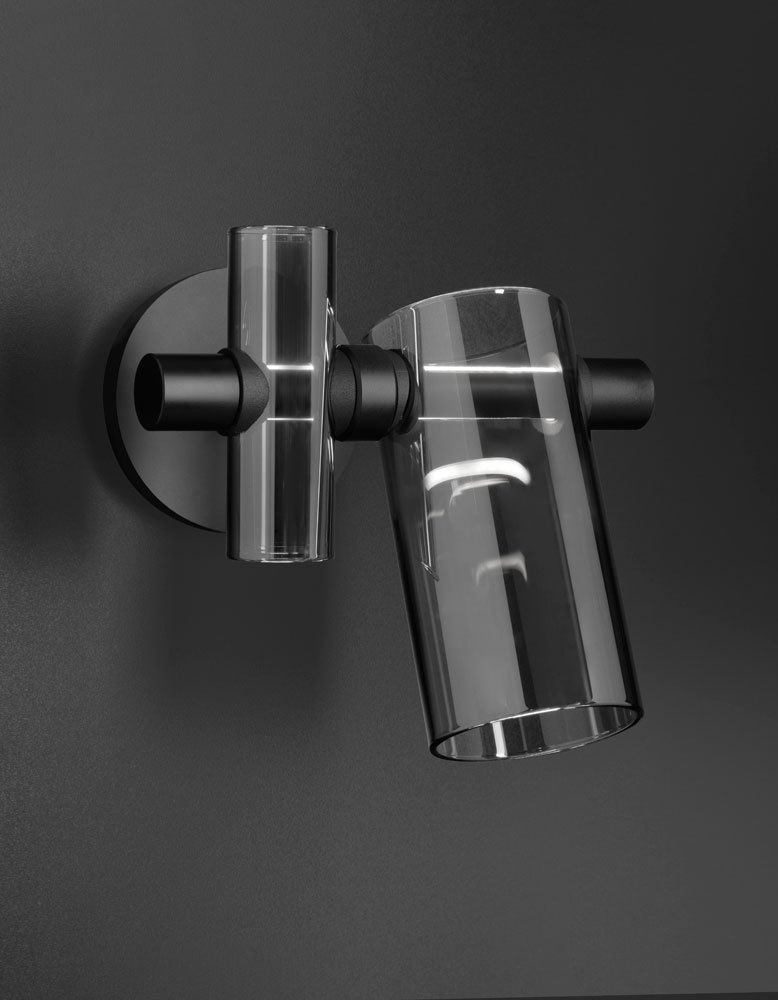
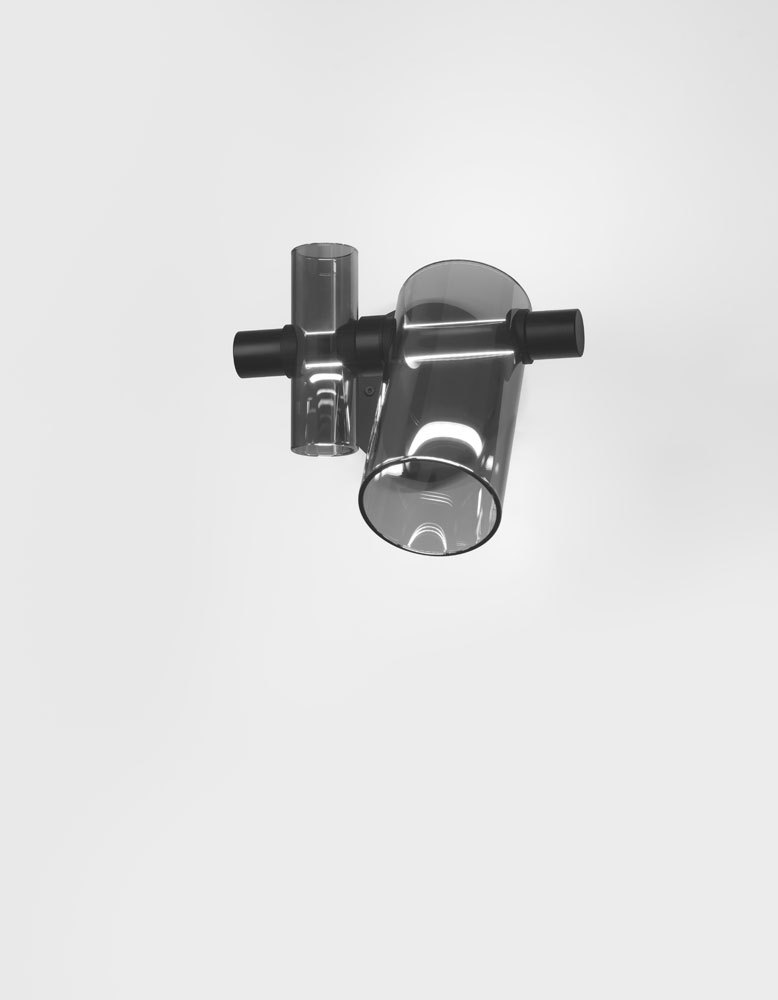
Dancing Glass invites us first to observe it up close, following the light along the edges of the glass, and then from a distance, when the composition becomes a single presence within the space. Its name finds its meaning in the continuous variation between a stable form and a shifting image.
The discreet and refined wall variant
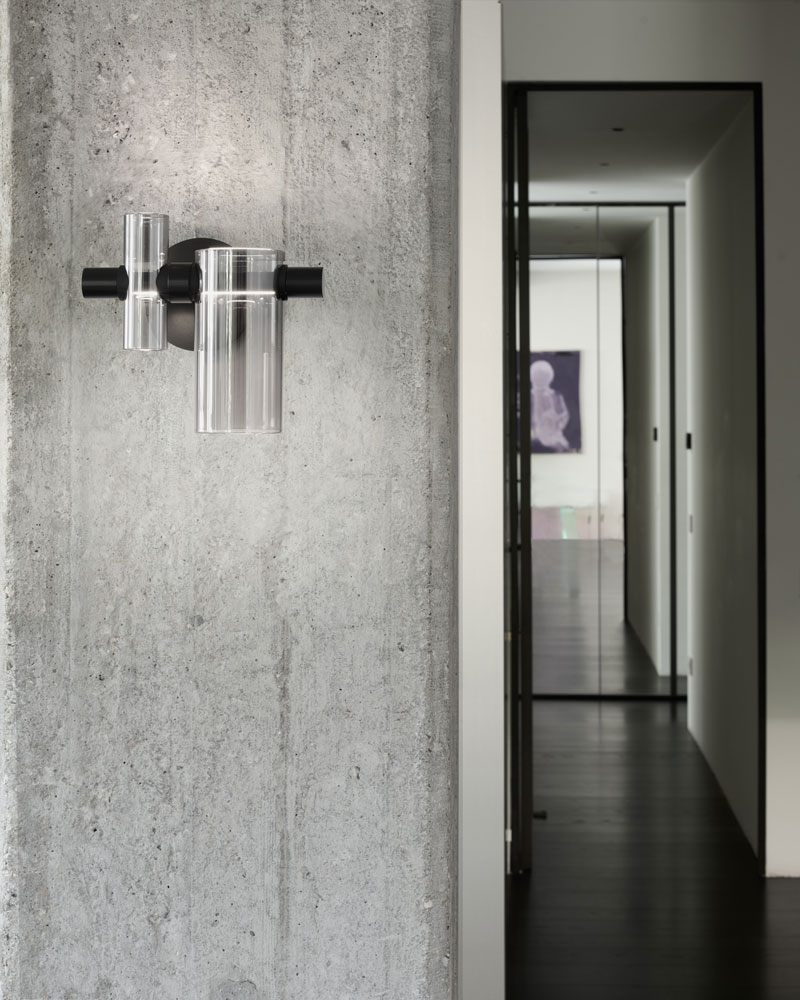
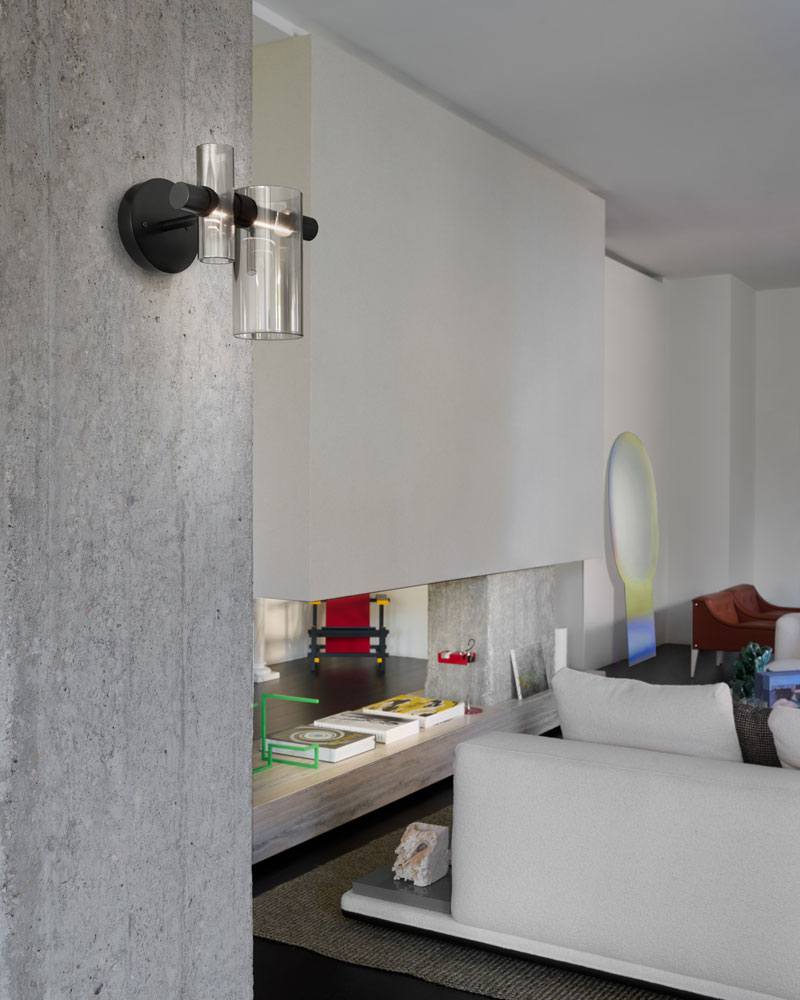
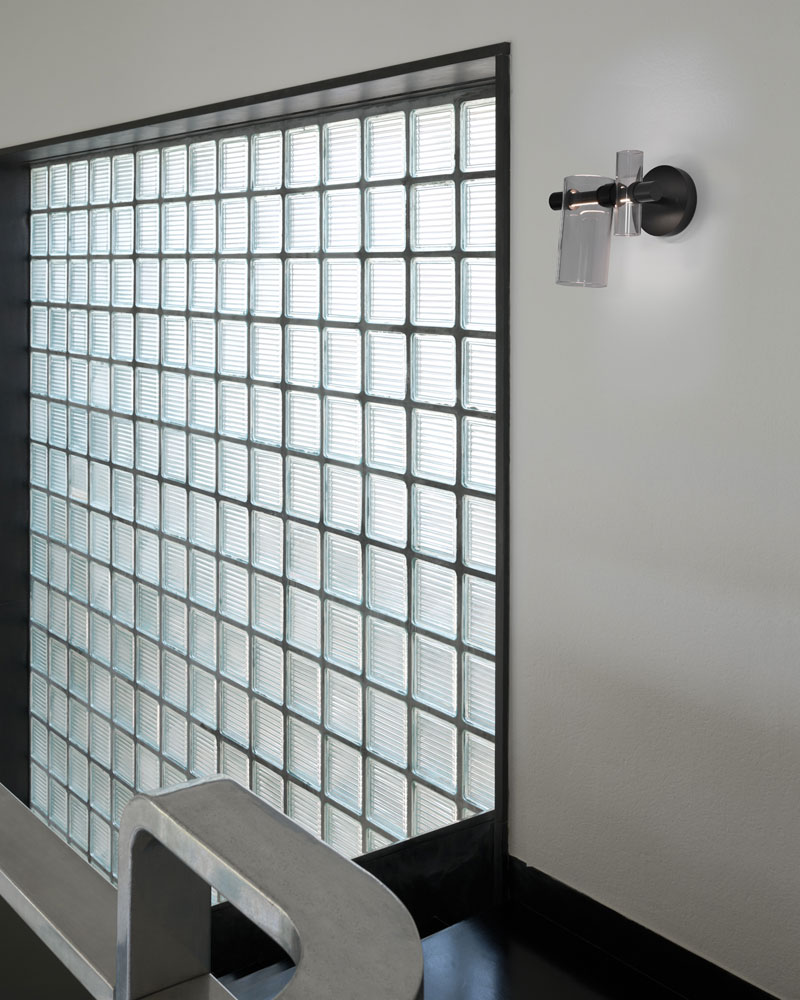
The series continues with Dancing Glass Applique. A single cylindrical element brings the relationship between glass, light, and shadow into focus on the wall. The scale shifts, while the same sensitivity to light effects makes the entire family recognizable.
A light sculpture for the interior
Above a dining table, the horizontal structure of Dancing Glass follows the length of the surface and brings light to the center of the room. In an open-plan living room, it can define the conversation area without interrupting the view toward the other spaces. The applique, meanwhile, works on a more intimate scale: along a wall or beside a piece of furniture, it allows glass and shadow to become part of the surface.
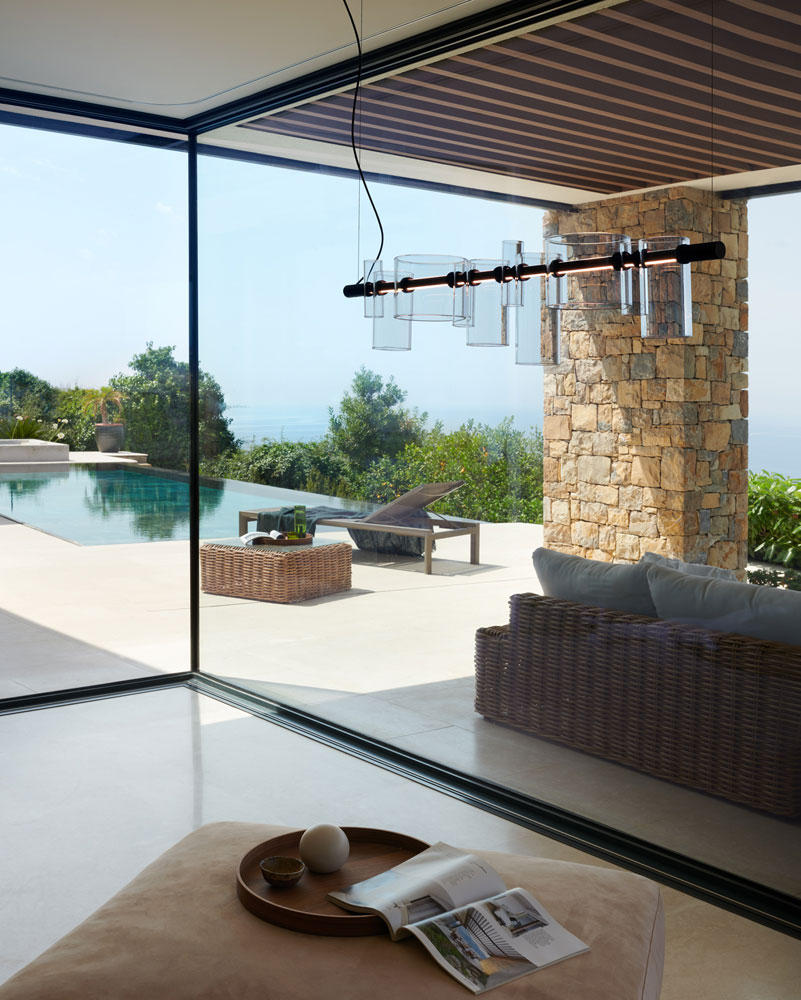
Nearby materials can also change how the lamp is perceived. Dark wood highlights its transparencies; opaque stone provides a quiet backdrop for reflections; a satin-metal accent echoes its precision. The light thus becomes part of the interior design, altering its perception as the hours of the day change.